Showing posts with label Facebook. Show all posts

Sunday, February 26, 2012

Who Do You Admire?


Jack Dorsey on the cover of Fast Company —
 Our new hero-archetype?
When I was a kid, it was pretty easy to identify heroes. They were policemen and firemen, soldiers and astronauts. They were President John F. Kennedy, Miss America, doctors, teachers and others who showed courage or strength. They were people who were, in some way, extraordinary. 

Jack Dorsey, co-founder of Twitter and founder of Square, is on the March 2012 cover of Fast Company, and seeing him made me wonder — who do people admire today and why? Are entrepreneurs the new heroes?

The fortunes made by innovators today might make a 20-something MBA's heart beat a bit faster because they have realized the American dream — using brains and hard work to achieve success and enormous wealth.

But is the ability to turn ideas into money what we should admire or strive to emulate? 

Having aspirational goals propels us to achieve. And the ability to innovate, and at times create a need for things we didn't know we needed, fuels the economy through the creation of jobs and the manufacturing of goods as well as their transportation and distribution. 

In other words, innovators make it possible for many people to live and thrive, and we all benefit in some way. But inventing the iPhone, Facebook, Google or Twitter isn't a realistic goal for most of us.

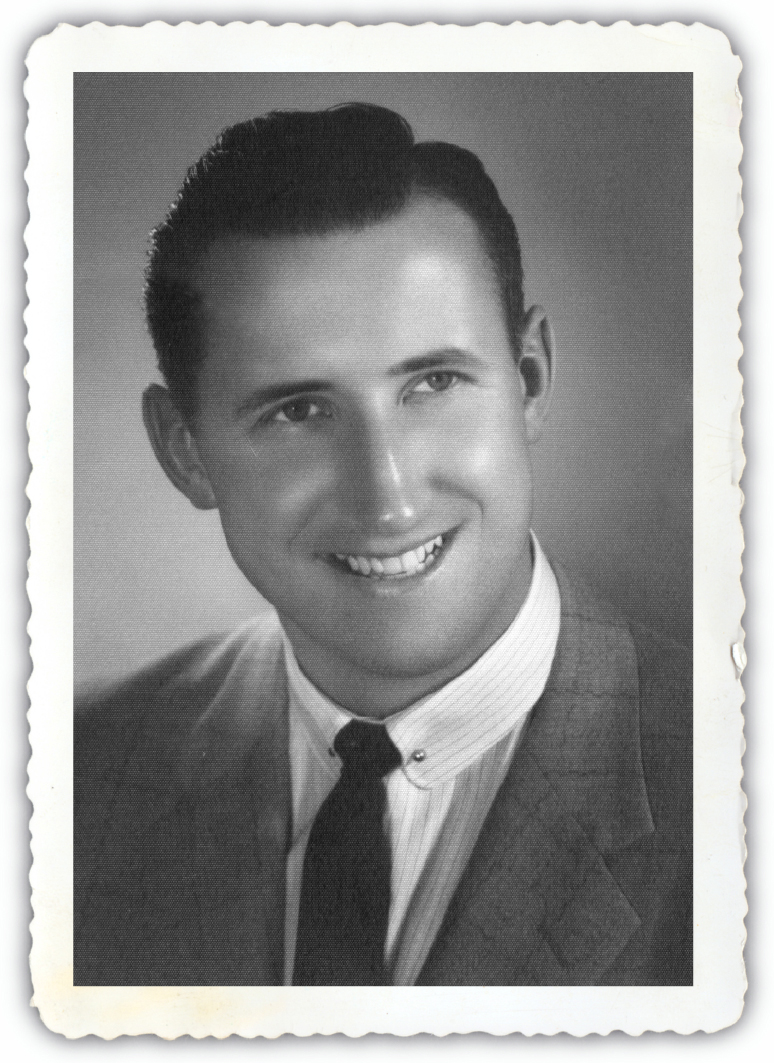
My father-in-law, Rich
My father-in-law, Rich, was a real hero to me. An ordinary guy with lots of heart, he was a WWII veteran who worked 30 years for Boeing, selling airplanes to Lufthansa, El Al and other airlines around the world.

Shortly before he retired from his very successful career, I remember him telling me it was good he was getting out before anyone "found him out." At the time I marveled that someone who was so good at what he did, was so self-effacing, but it spoke to his character. He was modest, not boastful. He was confident, but not full of himself. He didn't need to throw others into the shadows on his way up the corporate ladder.

By today's standards I wouldn't describe him as rich except by name. He made a very good living and provided well for his wife and 4 children. He lived by example. He was kind. He was generous. And he had a way of making every person he met feel very special.

But today I feel as though many of the qualities and values he embodied, which made him a giant in my estimation, seem low on the list of things people aim to achieve. Because today it feels like it's not enough to simply strive to be a good person.

Who are the roles models of today? I would love to know who inspires you. 


Friday, September 30, 2011

Connecting in Real Life


Real-life Meetups Make the World a Better Place


When I first heard about "Meetup," I had no idea why or how it started, but it sounded like a neat idea. Then a few days before the tenth anniversary of 9/11, an email arrived from Meetup co-founder and CEO, Scott Heiferman. I was so impressed, I asked if I could share it — but in order for it to not get lost in a sea of 9/11 posts and reflections, I wanted to let some time elapse.

His message reminded me of two things: the tragedy of 9/11 changed life forever in the United States, but some goodness resulted; and the importance of real-life, or as my friend, Jake, likes to say — "tangible," connections need nurturing in order for each of us to thrive.

Scott's message:

_______________________________________________

Scott Heiferman, CEO
and co-founder, Meetup
Fellow Meetuppers,  

I don't write to our whole community often, but this week is special because it's the tenth anniversary of 9/11 and many people don't know that Meetup is a 9/11 baby. 

Let me tell you the Meetup story. I was living a couple miles from the Twin Towers, and I was the kind of person who thought local community doesn't matter much if we have the internet and TV. The only time I thought about my neighbors was when I hoped they wouldn't bother me.  

When the towers fell, I found myself talking to more neighbors in the days after 9/11 than ever before. People said hello to neighbors (next-door and across the city) who they'd normally ignore. People were looking after each other, helping each other, and meeting up with each other. You know — being neighborly.  

A lot of people were thinking that maybe 9/11 could bring people together in a lasting way. So the idea for Meetup was born: Could we use the internet to get off the internet — and grow local communities? We didn't know if it would work. Most people thought it was a crazy idea — especially because terrorism is designed to make people distrust one another.  

A small team came together, and we launched Meetup nine months after 9/11. 

Today, almost 10 years and 10 million Meetuppers later, it's working. Every day, thousands of Meetups happen. Moms Meetups, Small Business Meetups, Fitness Meetups... a wild variety of 100,000 Meetup Groups with not much in common — except one thing: 

Every Meetup starts with people simply saying hello to neighbors. And what often happens next is still amazing to me. They grow businesses and bands together, they teach and motivate each other, they babysit each other's kids and find other ways to work together.  

They have fun and find solace together. They make friends and form powerful community. 

It's powerful stuff.  

It's a wonderful revolution in local community, and it's thanks to everyone who shows up. 

Meetups aren't about 9/11, but they may not be happening if it weren't for 9/11.  

9/11 didn't make us too scared to go outside or talk to strangers. 9/11 didn't rip us apart. No, we're building new community together!  

The towers fell, but we rise up. And we're just getting started with these Meetups.

Scott Heiferman (on behalf of 80 people at Meetup HQ) 
New York City
September 2011

_______________________________________________

I spend more and more of each day on my computer and mobile devices. On a recent weekend away from the Internet (AT&T provided no service to the area) I traded off driving in order to use my iPhone until the moment I went off the grid. 

Scott's email is a reminder to all of us of the importance of our connections to others. This past month I made an effort to spend some quality time with friends, and really be present. Getting together face-to-face takes a lot more time and energy than firing off an email, making a phone call or posting a tweet, but for the added effort, the reward is huge.

I'm glad Twitter, Facebook and other social media channels exist because it means no one ever has to "feel" alone. But 10 years after 9/11, maybe it's time to venture out into the real world, take a chance and engage. 

Meetup seems like a really cool place to start.


_______________________________________________

Real face time with friends the past month:

Doug Plummer

Dave Morris

Sean Gardner

George Zaharoff, Piccolo Zaharoff, Cindy Chin

Linda Criddle

Kathy Gill (l.)

Chris Pirillo (l.) Chris Widener (r.)

Glen, Paula, and Vic

Chris Burget and Lori McNee


Monday, April 25, 2011

I have an attitude problem

And every so often it shows.

A "Facebook friend" (who is a very smart and passionate woman, BTW, who I would be happy to befriend more traditionally if she lived closer than 200 miles to Portland) posted a link to something called "Free Love Day".

This hootchie is described in the link as
"...a day to promote awareness of suicide and depression, as well as to advocate a LIFESTYLE of unconditional love. On April 25th, put a heart on your wrist to signify that you will wear your heart on your sleeve and observe a LIFESTYLE of love. ASK SOMEONE HOW THEY'RE DOING. TELL PEOPLE YOU LOVE THEM AND DO IT. Nobody should have to feel so bad about themselves that they take their own life, so let's give them a reason not to! Let's change the world on April 25th!"
Well, okay then.

Anyway, the conversation from there went like this:ME: I'd prefer to draw crosshairs over the foreheads of the Koch brothers. 7.62mm national match corrected-for-drop-and-windage attitude adjustment, gentlemen. I'm here for your tax breaks.

I like to think I change the world in my own special way...
7 hours ago · LikeHER: You do John.
7 hours ago · LikeME: THEN I'd draw a heart on my wrist.
7 hours ago · Like · 1 person

I can't believe that some people think I'm not a sensitive guy just because when someone asks me what I would feel taking the life of another human being and I reply "Recoil".

Monday, January 31, 2011

Dictatus Papae

I hate to say this, but one thing that Facebook often lends itself to is a nattering lack of reflection.

I say this in a tone of rueful acceptance, mind you, not surprise or anguish.

It's a fucking "social network", after all.Generally I like to think that my selection of "friends" helps me avoid the "I'm picking out my toe jam! :-b" sorts of status updates; luckily I'm not bombarded with much of that sort of brain-destroying crap.Mostly the site does what it is supposed to do and provides me a sort of party line to check in with friends and chat about this and that. For all the handwringing about how the Evil Twitter, Facebook, and whatever other electronic media bete noir de jour are destroying civil society by substituting for "real human interaction", when you think about it these things are just replicating the slower means of distant communication humans have used since the beginning of literacy.

What is a "tweet" but a little postcard? What is a Facebook post but a short letter, a digital telegram, a typed-out phone call? "Having wonderful time, caught fish, weather fine. Come soon, Woosie."

I don't see how this happening in realtime, over a fiber cable, somehow makes the process dangerously antisocial. We've always enjoyed our long-distance relationships. Entire books have been published containing the epistolary friendships of pre-electronic times, when living a couple of tens of miles apart meant seeing each other once a year or so. People have always had ways of staying in touch with distant friends and lovers; these electronic means are just an adaptation of a very old gimmick, a quicker version of sending a house slave with a clay tablet to your brother and sister-in-law in Sumer.

But (and you knew there would be a but, didn't you?) to go with the advantages in celerity there is the disadvantage of brevity. If brevity is the soul of wit, it is the mother of inattention. A discussion limited to 420 characters isn't really much of a "discussion", and the one thing I find unlikeable about Facebook - I am not "on" Twitter and have no interest in doing so, since a tweet is even briefer than a Facebook post less informative, and thus more conducive to the ignorant-shouting sort of "communication" than Facebook - is that much conversation is necessarily brief and one-sided. A letter allows time and space for thought, and if two paragraphs are needed instead of one to dissect the issue they are there for the taking. The only limit is the paper and the patience of the writer, and reader.

Which may be the very heart of the matter. We as a culture are increasingly impatient; the notion of simply sitting and reading a letter - or a novel, or a long blog post - is becoming both difficult and challenging. Difficult because many of us are so busy, our days full of cascades of essential ephemera demanding our attention; challenging because our preferred style of prose is often simple and poorly suited to complex thought. While the text we read on paper or off the screen may be prolix the arguments are often crude, the exposition simplistic, and the argumentation circular or absent. So the quick declaratory statements of Facebook make us easier. We needn't marshal our overtasked intellectual reserve; the thinking is done for us.This has become a very roundabout introduction to a topic that emerged on Facebook the past week. Specifically, a friend of mine linked to this article in the New York Times discussing the falling out between the Roman Catholic bishop of Phoenix, Arizona, and a local formerly Catholic hospital.

It seems that the hospital in question performed an abortion on a woman who was in danger of injury or death if her pregnancy had progressed. The bishop, who had apparently warned the hospital that this sort of thing would put them outside Church law, used this surgery to sever the ties between the diocese and the hospital.

My friend was incensed. "Time to move into the 17th century, boys." is the way she put it. Another of her friends replied that the bishop had the right of it; that a "Catholic" hospital had the obligation to abide by church doctrine. Several more of us piled on and we had - especially for Facebook - quite a rousing little discussion. I don't think anyone's opinions were changed, but we at least got to hear a good bit from several sides on the matter.And the more I got to thinking about it, the more I found that I tend to believe in what I first said; that the bishop's job, if he were to be any sort of bishop and not a windsock for popular opinion, was to insist that the mother, as a Catholic or at least as the patient of a Catholic hospital, give her life for the life of her child in the same sense that a bishop would expect his priests to give their lives, if they had to, to ensure the lives, or the spiritual salvation, of those who depend on them.

His understanding of God's Will as expressed by his Holy Father should admit no less, and the tenets of his Church - an authoritarian organization whose fundamental nature is spelled out by the "Dictus Papae" (which includes such statements as "That of the pope alone all princes shall kiss the feet." and "That this (the Pope's) is the only name in the world.") - demand that those beneath him in the hierarchy submit to his interpretation of that Will.

That's cruelly hard. But religions in general ask us to put God first and ourselves afterwards; that's the nature of a religion, most religions. It's a feature, not a bug. Because of that demand religious faith can accomplish great things. Because of it faith can be the spark for horrible atrocities. The direction depends greatly on the nature of the person who "speaks" for the religion and the nature of those listening. But there is no promise that either the speaking or the reception will be beneficial and kind.

All we can only hope then is that our religions don't demand us to make choices that lead to suffering. But by their nature they can, and often do, and we can't really get one without the other, eh?

My bride, lovely woman that she is, is (if she only knew it) a classic American cafeteria Catholic. She has said that if she agrees with a doctrine, she would hew to it. If not, she would ignore it.

I can't do that or believe that.

To me the entire point of a religion - as opposed to a personal faith - is either accepting the doctrines of the religion or working to change them. But until they change, I don't thing that the adherent has an option to just ignore them.

Since I have yet to encounter a religion whose tenets I can accept without demur or disputation, I have no religion. Since I have yet to encounter a moment where my need to have an all-powerful Sky Daddy overpowers my skepticism of the entire notion, I have no personal faith, either. For good or ill, I am alone within my head when the moment for spiritual succor arrives.

And as ruthless as it is I wish that what happened to the hospital would happen more often. I wish that the Catholic Church, for example, would excommunicate people who use birth control, would stop granting annulments and force divorcees out of the laity. American Catholics haven't been forced to actually do what their church demands them to do for a long time. If they were, well, either the laity might change or the church might. Some people might find themselves alone as I do. Some may find that they can abandon themselves in order to have that Sky Daddy within them.

Either way, at least both sides would be consistent.

Because for me so long as a religion does not force itself into the public square and demand that people not its adherents adhere to its beliefs it should be true to itself. For some religions this is not a pretty or humane thing because by their nature they are not about the pretty and the humane but about the demands of a supernatural belief on a merely human soul.

This often makes them magnificent, grand, and terrible.

And it is perhaps the failure of my own soul that I would take the smallest common moment of human life; the sound of a sigh, the heat of a quarrel, the softness of a kiss, the breathless of lovemaking, the peace of a nap, the placid twilight of age, over all the magnificence and grandeur ever conceived.

Tuesday, November 2, 2010

LinkedIn: Social Networks Aren’t Just for Socializing

Note: hyperlinks in red


I think of Twitter as a cocktail party, and FaceBook as dinner party. Both can be fun, but they can also be noisy and full of drunk people.

LinkedIn is a place where business happens.

I’ve been on LinkedIn for four years. LinkedIn is a social network that allows you to make connections with trusted contacts and essentially create a personal Rolodex in the cloud. But it's much more than that.

In addition to the convenience of finding your important business connections in one place, it offers a host of useful resources for job seekers, sales people who are prospecting, and recruiters who are looking for qualified people to fill jobs. There are too many benefits to enumerate, but it’s not just a social network—it is a database of people and companies that can be searched geographically—and most of what it offers is freely available.

In 2006 my real-life best friend and fellow graphic designer started a job at PopCap, and she invited me to join LinkedIn. At the time, LinkedIn was populated with entrepreneurs, venture capitalists and business professionals, and required an invitation to join. In spite of its gated approach, its membership grew from five to eight million that year.


In 2007 when Facebook opened its doors to everyone and its membership took off, LinkedIn followed its lead, and by the end of the year it had more than 15 million users.

Unlike Facebook or Twitter, not everyone joins LinkedIn, but those who do recognize its value. Today LinkedIn has more than 80 million members across 200 countries and seven continents, and continues to grow at the rate of one new member per second.

When I opened my account, I invited a number of business associates to join me. But before I did, I spent time aggregating information, then wrote an introduction, cleaned up my resume and gathered other relevant data to populate my profile. At that time, profile pictures weren’t included, but they are now, and I think it is worthwhile to include a good photo that reflects the image you wish to project.


I'm not passing myself off as an expert, but I'm sharing what has worked for me.

ADVICE ABOUT HOW TO PUT YOUR PROFILE TOGETHER:

Clean up your resume.
Have someone with editing skills review it for spelling, grammar and punctuation. Don’t rely only on built-in grammar and spell checking tools, as they don’t necessarily detect context or poorly written prose.

Introduce yourself, including information prospective employers or colleagues would be interested to know.
Your LinkedIn page is like an agent who promotes your image to others when you aren’t there to do it yourself. Think about the kinds of experiences you have that sets you apart from others who offer the same goods or services, and make your case.

Identify your affiliations with professional organizations 

and groups.
For example, if you and a prospective employer are connected via an alumni group, that could be a point of connectivity. But LinkedIn is not Foursquare, and there isn’t a competition for the number of “badges” you display. Adding affiliations needs to be done sensibly.

If you feel you can contribute substantively, answer questions as an expert in your field.
Members can pose questions, and you can enhance your reputation if you can answer, conceivably positioning yourself as a “go-to” person in a particular discipline.

Take time to consider and make note of your achievements and honors.  Today I spoke with a friend who was cited as a tech maven in a Huffington Post story. I think most people would be interested to know about it, and it should be included in a profile.

Participating in your community as a volunteer demonstrates teamwork and good citizenship—attributes that are important to many employers and very often mirror their values. If you have contributed through volunteering, say so. 


Who should you connect with? To begin, I think you should connect to real-life current and former colleagues, associates and employers. They know you and will accept your connection request.

And finally, identify people who can recommend you.
You can ask a former boss or colleague if they will write a recommendation for you. You should ask only people who have direct knowledge of your work. 


If someone takes the time to help you—I can’t stress this enough—you MUST thank them—preferably with a handwritten note. Why do that instead of sending an email? Because few people do it and it makes you stand out. I’m often amazed at how people fail to formally express thanks when someone goes out of their way to do something for them. There is a great story about the importance of handwritten thank you notes in Chapter 41 of Randy Pauch’s The Last Lecture. Read it.

LinkedIn has led to my receiving unsolicited job offers, which illustrates what it can do for people, even passively. It provides options to link to your Twitter feed and to post status updates,
and recently partnered with Behance to link visual work samples to user profiles. But for the most part, you will find only salient information on LinkedIn. Unlike an individual web site which must specifically be sought out, when a person is searching LinkedIn, they are already in the mode to find you.

It really is a no-brainer: An investment of time on your LinkedIn profile can be beneficial on a number of levels. And beside the strictly business end of things, there can be a social aspect of joining groups where others share your interests or expertise.

When I started using Twitter in 2008, I would occasionally see people refer to LinkedIn as a network for old people. Since then, I’ve seen my kids and their friends graduate from college, and more and more of these twenty-somethings are joining LinkedIn and asking to connect.

As LinkedIn has evolved and innovated, one thing hasn’t changed: IT WORKS.

____________________

One reader mentioned he'd received a LinkedIn invitation from me, which is a concern. Please beware—it could be spam.